People ask me where the machines come from.
They assume there is a room somewhere in my house full of brass and gears, and that I sit in it and dream. The truth is duller and far more fun. I do not invent the past. I eavesdrop on it.
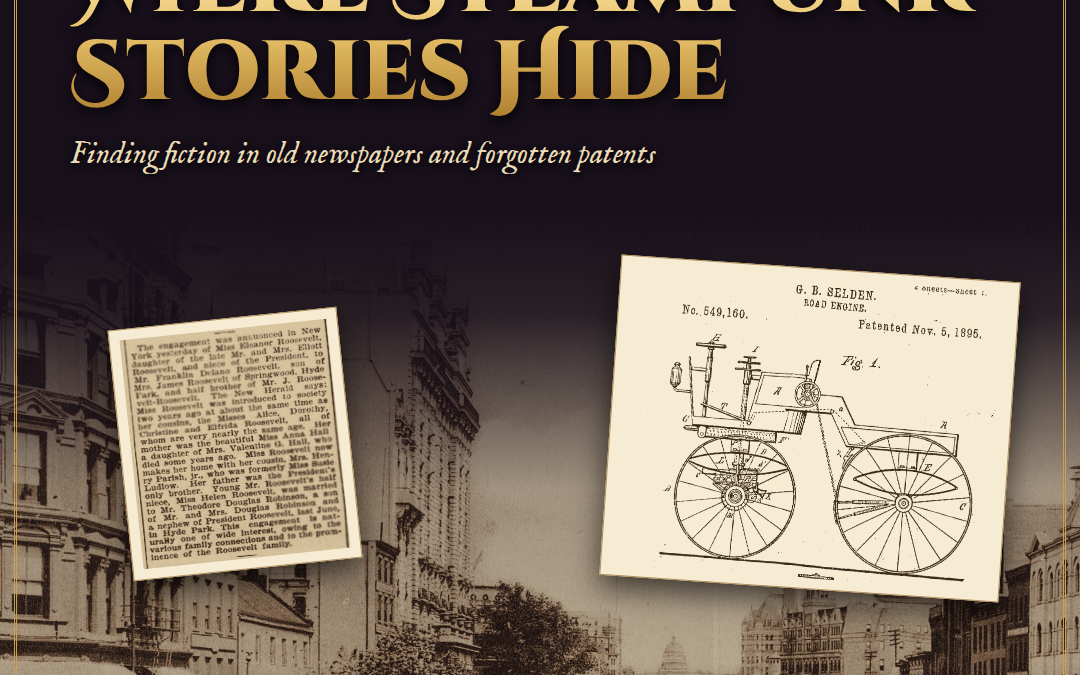
Open a newspaper from 1904 and you are not reading about a world waiting for the future to arrive. You are reading about a world that already had electric taxicabs on the street, pneumatic tubes shooting mail under the pavement, and men selling compressed-air streetcars as the coming thing.
Half the marvels I put in my books are barely exaggerated. The other half were sitting right there in the advertisements, and nobody had to make those up either.
The Chrono Mystery Guild bonus story The Engine Beneath the Avenue came straight out of that habit. So let me show you how it works, and then let me show you how five writers far better known than me do the same thing.
What I actually do
There is no mystery to the method. There is only the willingness to sit still.
I read the papers. Chronicling America, at the Library of Congress, is free, and it is full-text searchable, and it will eat an entire afternoon before you notice lunch happened. My one piece of advice: do not only read the headlines. Read the advertisements. Read page six. The front page tells you what people thought was important. The back pages tell you how they actually lived, what things cost, what they were embarrassed about, and what they wanted badly enough to buy on credit.
I read old patents. Anything filed before about 1920 is long expired and free for the taking, and the drawings alone will hand you a plot. Somebody sat down and diagrammed a thing they believed would change the world. Most of the time it did not. That gap, between the drawing and the world, is where a novel lives.
I go where the paper is. For my Blanche Hotel project I spent two years with local newspapers, county records, and people who remembered. There is no database for the woman who ran the switchboard in 1912. There is only somebody’s granddaughter.
Then I ask one question. Find the true thing first. Then ask “and what if.” Never the other way around. If you start with the what-if you will bend history to fit it, and readers can feel that even when they cannot name it.
The machines that vanished
Here is where I have to be careful with you, because this is my favorite subject and it is also where writers get lazy.
You have heard the story. Some brilliant tinkerer built the engine that ran on nothing, the bulb that never burned out, and the oil men bought the patent and locked it in a vault. It is a wonderful story. It is also, in most of its famous versions, a story.
But the pattern underneath it is documented, and the documented cases are better than the legends.
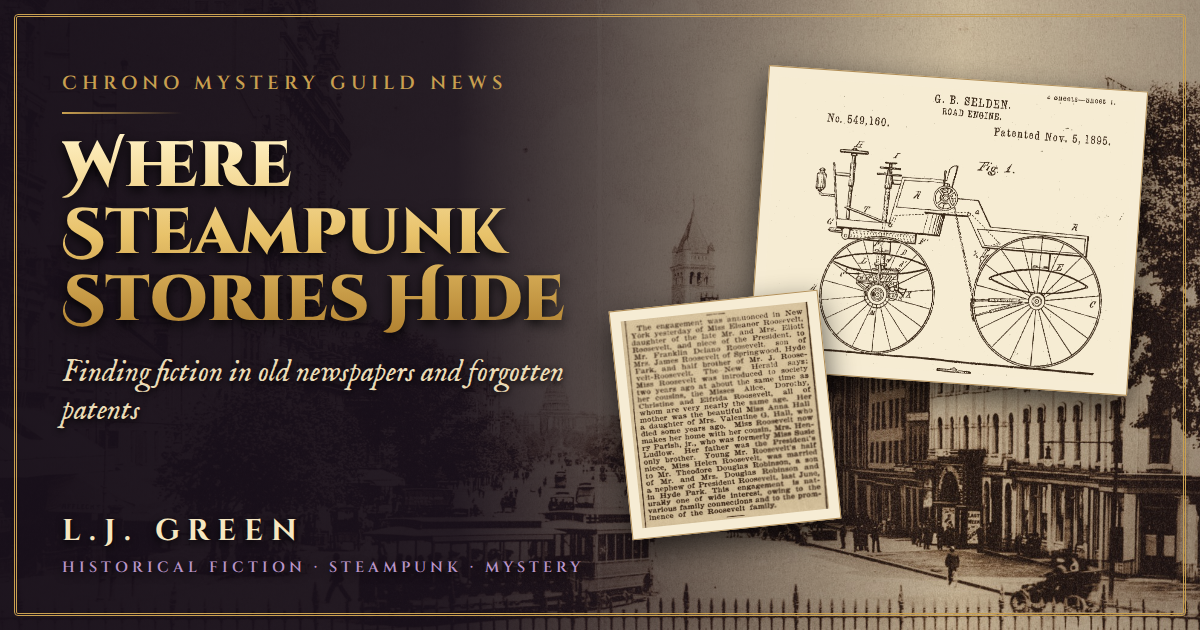
Take the Selden patent. In 1895 a lawyer named George Selden held a patent broad enough to cover the gasoline automobile itself. He never built an industry. He did not have to. A syndicate licensed his patent and taxed nearly every American carmaker for the privilege of existing, until Henry Ford refused to pay, lost in court, appealed, and finally broke it in 1911. That is a patent used as a tollbooth, and Ford wrote about the fight in his own words.
Take the Phoebus cartel. In the 1920s the world’s major lightbulb manufacturers signed an agreement to shorten the life of the lightbulb, from around 2,500 hours down to 1,000, and they fined member companies whose bulbs lasted too long. This is not a rumor. It is in the meeting minutes. IEEE Spectrum laid it out in The Great Lightbulb Conspiracy.
Take the streetcars. General Motors and its partners were criminally convicted in 1949 of conspiring to monopolize the sale of buses and supplies to the transit companies they had bought up. They were acquitted on the broader charge, and historians still argue about how much of the streetcar’s death was conspiracy and how much was cheap gasoline and cheaper suburbs. Both halves of that are true at once, which is exactly why it makes good fiction. The overview here lays out both sides.
And take the electric car, which is my favorite, because around 1900 roughly a third of American automobiles ran on batteries. Quiet, clean, easy to start, and marketed hard to women. Then gasoline got cheap, the electric starter arrived, and we lost a century.
Now the other pile. The famous 200-mile-per-gallon Pogue carburetor, bought and buried by the oil companies, has never once performed under a controlled test. Snopes has the honest version.
So why do I bring up the legend at all? Because both piles are fuel.
The documented cases give me the mechanism: patents as weapons, better machines strangled in the crib, ordinary people who never learn what they were denied. The legends give me something just as valuable, which is what people believed in their bones. My job is only to know which tank I am drawing from.
In the books, mind you, the vault full of stolen wonders can be as real as I please. That is the whole pleasure of the genre.
Five writers, one habit
I am in good company, and you do not have to take my word for any of this, because most of them have written it down.
Jules Verne worked from a card index of thousands of notes clipped from newspapers and scientific journals, and he was blunt that he was extrapolating from published science rather than inventing from nothing. You can read him saying so in an 1894 interview at his home in Amiens, which is free online and a delight.
Gail Carriger has done the genre a real service by publishing her research method instead of guarding it. Her post 25+ Tips for Researching a Victorian Setting is the single best starting point I know for a new steampunk writer, and her site has resource lists behind it that go on for days.
Tim Powers is the one whose method is closest to my own heart. He calls it secret history: never contradict the recorded facts, and build your story in the gaps between them. If a man’s biography has an unexplained three weeks in Naples, that is where the novel goes. He explains it in his Lightspeed interview, and Cory Doctorow wrote a fine essay on the technique called Divination.
Cherie Priest researched Seattle’s real history for Boneshaker and the Clockwork Century, then moved what she needed to move and told her readers plainly that she had done it. That honesty is a craft decision, not an apology. She talks about the work in this Clarkesworld conversation.
Nisi Shawl spent years researching the Congo under Leopold II to write Everfair, and used the genre to hand history’s silenced people the machines and the victory they were actually denied. It is the most serious argument I know for why this genre matters. She talks about why she wrote it in this interview with The Millions.
Five writers, one habit. Every one of them starts from the true thing.
Try it yourself
Give it one afternoon. Pick a year, pick a town, open Chronicling America, and read until something snags on you. It will. It always does.
That is exactly how The Engine Beneath the Avenue got written. There was a real judo lesson in the White House basement in 1904. There was a real engagement announced that December, and a real wedding the following March on East Seventy-Sixth Street in New York, with the President of the United States giving the bride away.
And here is my favorite part, which I did not find until the story was already drafted.
I went looking for wedding coverage and turned up the New York Evening World for the afternoon of March 17, 1905, instead. Sixty thousand men marching for St. Patrick. And in the next column over, a plain account of how the President got to town: a six hour run up from Washington on a Pennsylvania limited with a private car named the Olympus hitched on behind, two Secret Service men in the party, and a cordon of police holding the platform at Jersey City while he came down a freight elevator to a waiting carriage.
I had spent weeks writing a story about a secret presidential railroad car. The real one had been sitting in a newspaper the entire time, and it was better than anything I invented, because it happened.
Everything underneath my story is true. Only my train is mine.
⚙ A Chrono Mystery Guild Exclusive ⚙
Read the Story This Research Built
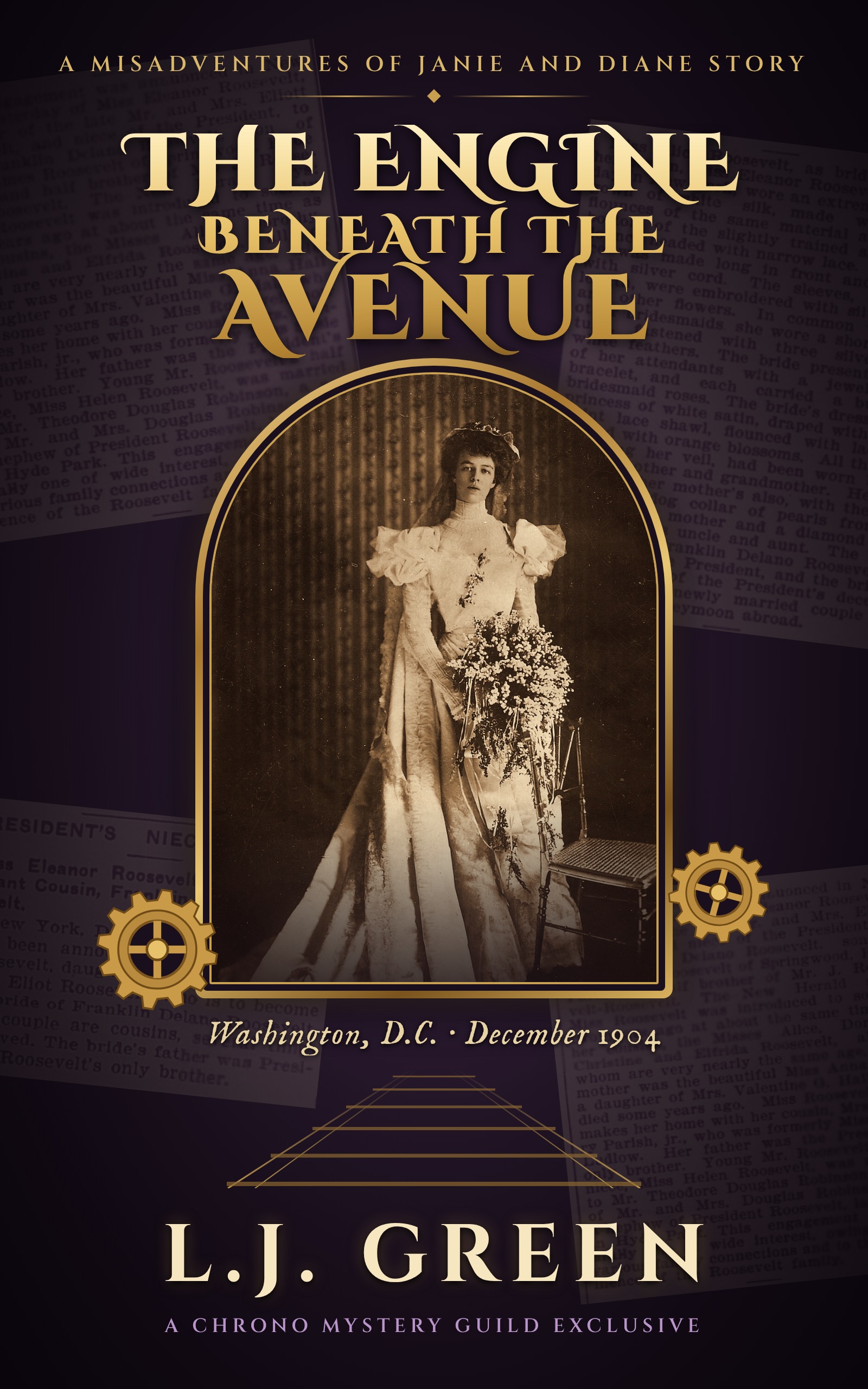
The Engine Beneath the Avenue is not published anywhere else. Join the Chrono Mystery Guild and it arrives in your inbox within a few days, along with a free copy of The Box, the story that started the Misadventures of Janie and Diane.